Most apps that hold your stuff borrow the same tired metaphor: folders. Nested, rigid, inherited from filing cabinets and never really questioned. We tried it. It felt wrong almost immediately, because a collection isn’t a filing cabinet, and forcing it into one drains the life out of it. So we built Bubbles instead.
A Bubble is simply a way to group the things you collect, and it bends to how you actually think rather than how a computer would prefer you to think.
Group by set, by room, by story
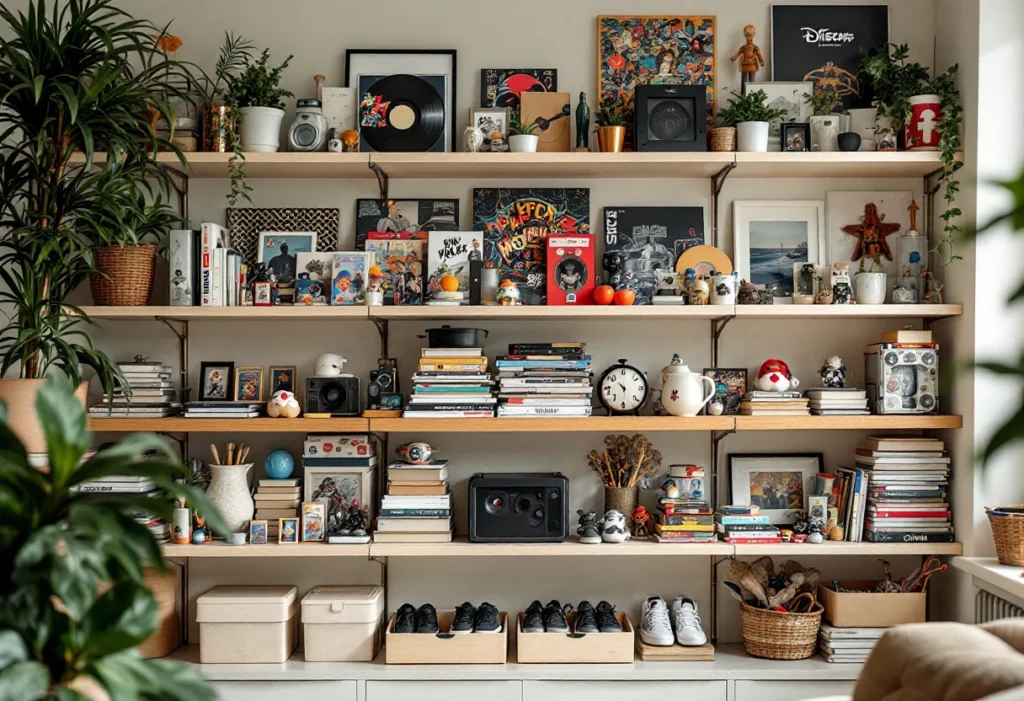
The freeing thing about a Bubble is that it can be anything you want it to be. One collector makes a Bubble for a single trading-card set they’re completing. Another makes one for “the shelf in the spare room,” because that’s genuinely how they picture their figures. Someone else groups records by the era they remember buying them, not by artist or label, because the memory is the point.
None of those are wrong. A folder structure quietly insists there’s a correct way to file something. Bubbles don’t. You can organise by set, by room, by story, by mood, and the app simply keeps up.
Bubbles inside Bubbles
Real collections have depth, so Bubbles nest. A big “Sneakers” Bubble can hold a “Runners” Bubble and a “Collabs” Bubble inside it. Your watches can split into everyday and special-occasion without you ever leaving the watch world. You zoom out for the whole picture and zoom in for the detail, the same way you’d walk up to a shelf and then pick up a single piece.
And because Bublr’s records are structured underneath, an item can live in more than one Bubble at once without being copied or trapped. A card can sit in its set Bubble and your favourites Bubble at the same time. You’re grouping, not duplicating.
How a big collection stays calm
The real test of any system is what happens when the collection gets large. Folders get worse with scale: more nesting, more dead ends, more time spent deciding where something “belongs.” Bubbles get better with scale, because they let a sprawling collection break itself into calm, human-sized views you can actually take in.
That’s the quiet goal here. Not a tidier database, but a calmer relationship with your own things. When five hundred items can be looked at as a handful of Bubbles that each make sense to you, the collection stops feeling like a pile to manage and starts feeling like a collection again. Bubbles, not folders. A small idea, with a big consequence.